







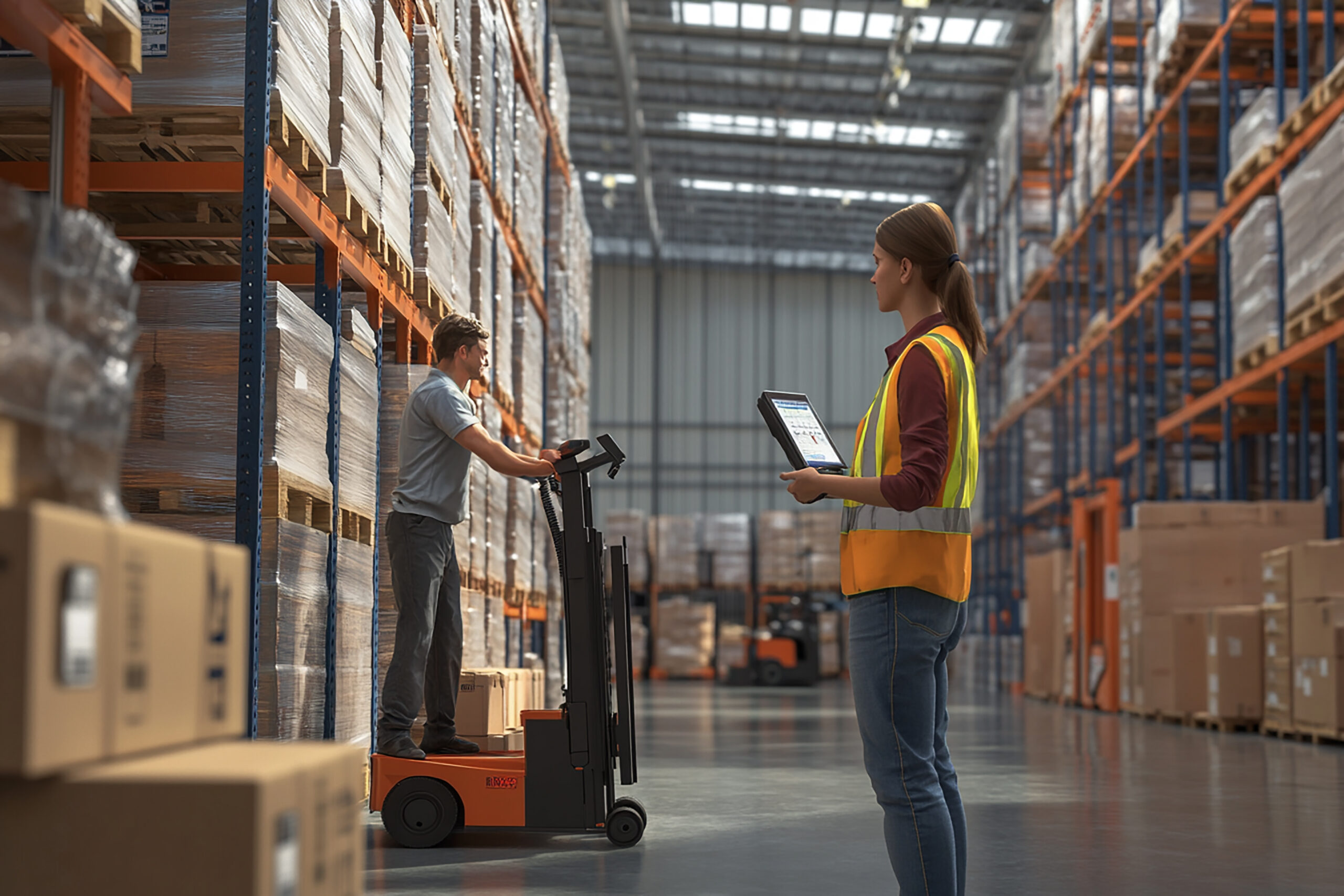
Warehouse management plays a pivotal role in the smooth operation of supply chains and the successful delivery of goods. It encompasses storing and handling physical products before they reach their final destinations. This function is indispensable for a variety of business models, from large retail chains to E-Commerce platforms. It’s important to note that the terms’ warehouse’ and ‘distribution center’ serve distinct purposes.
At Smart IS, we specialize in advanced warehouse management technologies like WMS and automation to enhance operational efficiency. This blog explores the evolution of warehouse management, highlighting the core technologies, emerging trends, and best practices that are shaping the industry’s future.
The Fundamentals of Warehouse Management
Warehousing is the process of storing and shipping physical goods in a warehouse. Warehouses can be used in different business settings to store goods before shipping them to a specific location or different customers. For example, a business like Walmart may use a warehouse to store its goods in bulk and ship them to stores when inventory falls short, and items need to be put on shelves.
It is important to differentiate between a warehouse and a distribution center. A warehouse is simply a building used to store inventory, whereas a distribution center not only stores the inventory but also provides an order fulfillment facility through the processes of picking, packing, and shipping.
Also Read: Understanding Cloud-Based Warehouse Management System (WMS)
Core Warehouse Management Technologies
Warehouse Management Systems (WMS) are critical for managing and monitoring the various processes involved in warehousing. They handle data related to inventory and support tasks such as receiving, storing, and shipping goods.
Cloud technology has become a central focus in WMS, resolving data-storage issues and enhancing cyber security. Between 2023 and 2028, the market for cloud supply chain management is projected to experience a compound annual growth rate (CAGR) of 11.09%.
Robotics and automation play a significant role in reducing the physical strain on workers and streamlining supply chain processes. Automated systems can replace labor demands related to pickers and handle tasks such as packing and shipping, leading to cost reduction and increased efficiency. The Internet of Things (IoT) also contributes to this transformation by integrating wearables and other devices into warehouse operations.
Emerging Trends in Warehouse Management
Several key trends are shaping the future of warehouse management. Automated-Guided Vehicles and other robots are now used to reduce the time spent by workers moving from one location to another. The value of these robots has decreased, making them more accessible for integration into warehouse operations.
Blockchain technology is gaining traction for its ability to provide a secure and tamper-proof record of digital data. It can be used to record the transmission of records and material assets, share production figures, trace receipts and shipments, and link supplies to digital tags and barcodes.
Inventory robots, such as tag surveyors, are used to manage daily record counts. These robots can check inventory from up to 25 feet away using RFID scanners and sensors, providing more precise and up-to-date records and helping to prevent record theft. The use of robots, such as those in Ocado’s “The Hive” warehouse, demonstrates the capacity of automation to handle large volumes of orders efficiently.
Optimizing Warehouse Operations
In warehouse management, optimizing inbound and outbound processes is crucial. The inbound process includes receiving goods from suppliers and storing them effectively, while the outbound process involves picking, packing, and shipping products to customers.
Technologies such as slotting and picking are used to enhance order fulfillment. Slotting optimizes the storage location of items to improve picking efficiency and picking technologies to streamline the collection of items for shipment. Integration of labor and yard management systems further improves operational efficiency, ensuring that all aspects of warehouse operations are coordinated effectively.
Futureproofing Your Warehouse
To future-proof a warehouse, it is essential to adapt to rapid technological advancements and ensure scalability and flexibility in warehouse design. The growing adoption of advanced technologies like AI, machine learning, and robotics will continuously improve warehouse management practices.
Preparing for these changes involves embracing innovative solutions and integrating them into existing systems to maintain a competitive edge. Along with that, it is also important to partner with a warehouse management consulting firm like Smart IS, which has decades of industry experience, expert solution architects, and a suite of groundbreaking WMS products.
Our proven track record of successful implementations and client satisfaction sets us apart in the industry. Partnering with Smart IS ensures that you have the expertise and resources to streamline your Blue Yonder warehouse operations and stay ahead of the competition.
Conclusion
Understanding modern warehouse management involves recognizing the fundamental processes and embracing the technological advancements that drive efficiency. Integrating advanced systems like cloud computing, robotics, and blockchain is reshaping the industry, from basic warehousing concepts to the latest technological breakthroughs. As technology evolves, staying informed and adaptable will be key to optimizing warehouse operations and preparing for the future.
For professional advice on WMS implementation and upgrades, please feel free to contact us at your earliest convenience. We are committed to ensuring that your operations run as smoothly as possible.









One thought on “From Basics to Breakthroughs: Understanding Modern Warehouse Management”