






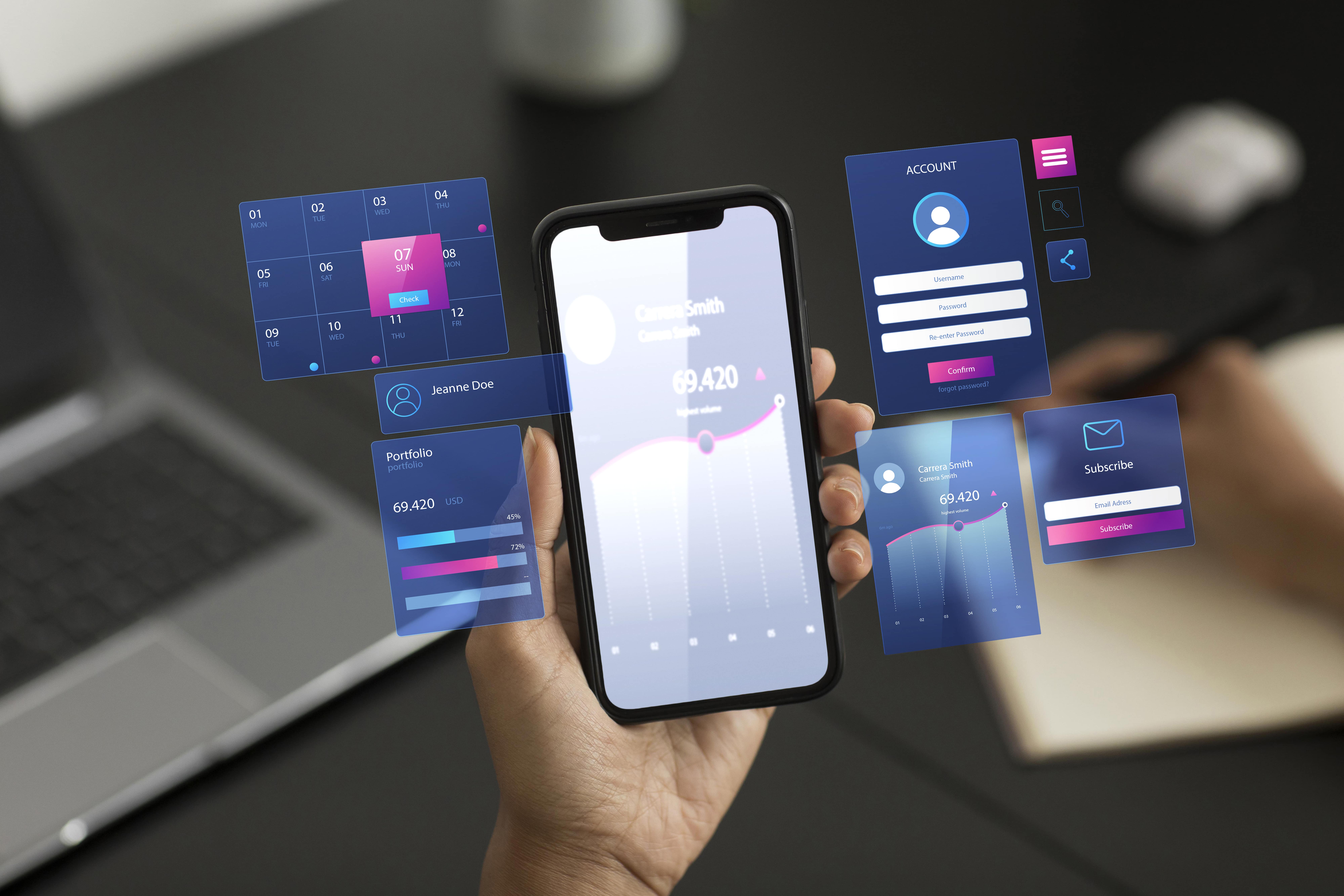
In 2024, businesses need more than just an online presence—they need customized mobile solutions that cater to their unique business needs. For companies aiming to stand out, iOS app development offers a powerful way to provide personalized experiences that meet specific business goals. There are roughly over two million apps available for download on the Apple App Store.
At Smart IS, we deliver customized iOS applications that align perfectly with your business strategy. With years of experience in iOS app development, Smart IS designs user-centric apps that not only enhance functionality but also ensure an optimized, seamless experience for both users and stakeholders. Read on to find out why custom iOS development is key to your business growth.
Why Custom iOS App Development Matters for Your Business
In these times where users expect seamless and intuitive digital experiences, generic, one-size-fits-all solutions often fall short. Custom iOS app development allows businesses to create tailored applications that align with their specific goals, workflows, and customer needs. Going for a custom solution, you’re not just building an app—you’re creating a unique user experience that reflects your brand identity and addresses the precise challenges of your industry.
Custom iOS apps offer the flexibility to integrate features that enhance efficiency, improve customer engagement, and provide real-time data access. They can be scaled and adapted as your business grows, ensuring long-term relevance and value. This can help you to streamline internal processes and deliver personalized services to customers.
Key Benefits of Custom iOS App Development
Investing in custom iOS app development provides a wealth of advantages for businesses looking to offer personalized experiences to their users. Unlike off-the-shelf applications, custom apps are tailored to meet the specific needs of your business, providing flexibility, control, and a more engaging user experience.
A case study highlighted that one client saw a 23% increase in profits after switching from a white-label app to a custom-developed application. Let’s explore some of the key benefits:
- High Scalability: Custom iOS apps are built to scale your business and allow you to scale up further than competitors. As your user base grows or your operational needs change, the app can be easily adapted to handle increased workloads without compromising performance.
- Enhanced Data Security: With custom iOS development, you have control over security features, ensuring that your sensitive business data is well-protected. You can implement advanced security protocols to protect against breaches.
- Tailored User Experience: Custom apps are designed with your specific users in mind, providing a seamless and intuitive experience that reflects your brand’s values and goals. This leads to higher engagement and satisfaction.
- Improved Performance: By focusing solely on the features and functionality your business needs, custom apps eliminate unnecessary clutter, resulting in faster performance and a smoother user experience.
Custom iOS Development Process
Building a custom iOS app involves a detailed, step-by-step process to ensure the final product aligns perfectly with your business goals and delivers a high-quality user experience. Here’s a brief look at the key steps involved in custom iOS development:
- Finalizing the Project Scope: The first step in the development process is to clearly define the project scope. This includes understanding your business needs, identifying key features, and setting expectations for functionality and timelines.
- Application Layout Approval for the Solution: Once the project scope is set, the next phase focuses on the app’s layout and design. Wireframes and mockups are created to visualize the app’s structure and user interface.
- Developing the iOS Application: After the layout is approved, the development team begins coding the app. This involves building the front-end user interface and back-end infrastructure and integrating features and functionalities as specified in the project scope.
- Thorough Testing and QA: Quality assurance (QA) is a critical phase of the process. The app undergoes rigorous testing to identify and resolve any bugs, performance issues, or usability problems.
- Deployment and Maintenance: Once testing is complete, the app is deployed to the App Store or your internal platform. After launch, the development team provides ongoing maintenance and updates to ensure the app continues to perform optimally.
Smart IS Approach to Custom iOS App Development
At Smart IS, our custom iOS app development process is designed to deliver solutions that are perfectly aligned with your business objectives. We combine technical expertise with a deep understanding of the industry. We start with thoroughly understanding your business needs and goals through a client-centric discovery process.
Our design team works closely with you to develop a user-friendly app that reflects your brand while providing a seamless user experience. Utilizing an agile development methodology in our project management approach, we remain flexible and adaptable throughout, making iterative improvements based on your feedback to ensure the app evolves with your vision.
Quality assurance is embedded at every stage of the development cycle, with rigorous testing to ensure the app is secure, reliable, and performs flawlessly. Once deployed, our commitment to excellence doesn’t end.
Conclusion
We have explored the benefits and features of custom iOS app development, including enhanced data security, tailored user experience, and improved performance. Overall, custom iOS app development is a valuable investment for businesses looking to differentiate themselves, enhance user experience, and achieve their strategic objectives.
Learn more about what we do, and contact us today for innovative, state-of-the-art custom iOS apps.