







Introduction
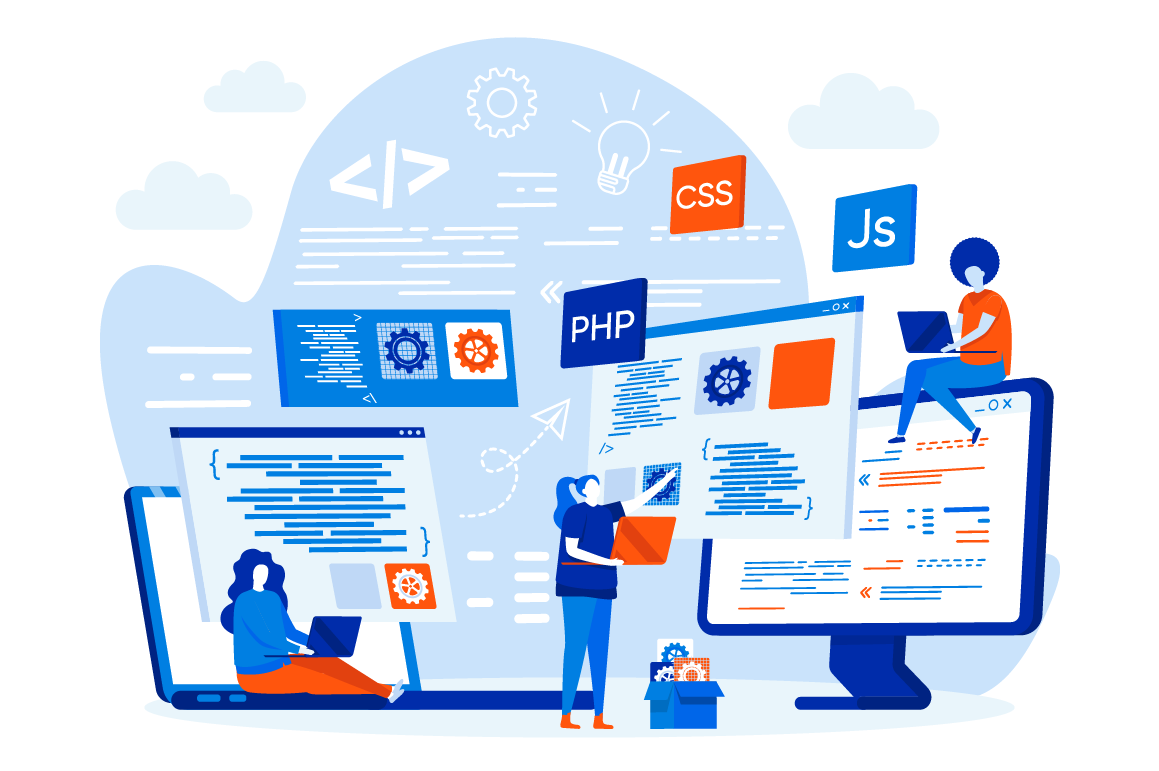
Front-end development has changed a lot from its early days. Back then, it was a bit like trying to gather a group of playful cats—it was tricky. Some people might think it’s as easy as taking a stroll in the park, but those who know it well understand it’s more like exploring a magical world. In this article, we’ll take a fun journey into the world of front-end development, where pixels have parties, and developers do two things at once—being creative and thinking logically.
The Evolution of Front-End Development
Front-end development has undergone a significant transformation. It’s not just about making websites look pretty anymore; it’s evolved into a multidimensional discipline that demands diverse skills and meticulous attention, much like conducting a circus where the clowns are code, and the acrobats are animations. This transformation reflects the changing landscape of the web, where user expectations are higher than ever.
State Management: The Orchestra of User Interactions
Imagine modern web applications as dynamic orchestras, where every instrument plays a crucial role in creating a harmonious user experience. Front-end developers use libraries and frameworks like React, Vue.js, or Angular to master state management. Think of this as being the conductor who ensures every note plays in perfect harmony. State management ensures that when you interact with a web app, it responds smoothly and consistently.
Performance Optimization: Racing Against the Clock
In the fast-paced world of the internet, performance is king. Users expect websites to load faster than a caffeine-addled cheetah on rollerblades. Front-end developers optimize various aspects like code, images, and assets to ensure swift loading times. They employ techniques such as lazy loading (loading only what’s needed when it’s needed) and code splitting (breaking code into smaller, manageable pieces) to make websites run faster than a squirrel hunting for its next acorn. Speedy websites not only improve user experience but also positively impact search engine rankings.
Security: Safeguarding the Digital Realm
Picture security vulnerabilities in front-end code as potential gateways for digital catastrophes. These vulnerabilities can invite hackers to a masquerade ball they weren’t invited to. Front-end developers assume the role of digital sentinels, guarding against threats like cross-site scripting (XSS) and cross-site request forgery (CSRF). They follow secure coding practices, which lay the foundation for a digital fortress complete with moats, drawbridges, and an army of code knights. Ensuring the security of a website or application is critical to protect both user data and the reputation of the business.
Data Handling: Crafting Seamless Experiences
Fetching and presenting data is the heart of front-end development, and front-end developers are the DJs of data. They fetch and present data efficiently, ensuring a seamless user experience on the web’s dance floor. Whether it’s through technologies like GraphQL (a query language for APIs), REST (a standard for designing web services), SOAP (a protocol for exchanging structured information), or gRPC (a high-performance RPC framework), they ensure that data flows smoothly and is displayed in an engaging manner.
Tooling and Build Processes: The Developer’s Swiss Army Knife
Modern front-end development relies on an array of tools and streamlined build processes. Think of these tools as a developer’s Swiss Army knife. Builders and bundlers like Vite, esbuild, webpack, and Gulp are equipped with solutions for optimizing images, minifying JavaScript (making it smaller and faster to load), and automating various development tasks. While they can’t brew coffee (yet), they significantly simplify the development process, making it more efficient and manageable.
Testing and Quality Assurance: Rigorous Vigilance
Front-end developers are meticulous testers. They use end-to-end (e2e) testing tools like Cypress, Playwright, and Selenium to ensure applications function seamlessly across different browsers and devices. It’s like they’re deliberately trying to break things before users encounter issues. This rigorous testing helps deliver a reliable and bug-free user experience.
Type Safety with TypeScript: Error Prevention Mechanism
In the world of front-end development, TypeScript is like having a friendly code janitor who sweeps away potential coding errors before they can wreak havoc. TypeScript adds a layer of safety by introducing static typing to JavaScript. It checks code for errors before it’s even run, reducing the chances of bugs slipping through the cracks.
User Authentication and Authorization: Gatekeepers of Access
Implementing robust user authentication and authorization mechanisms is paramount. Front-end developers are the gatekeepers of user access and ensure secure user login states and controlled access to sensitive data. They implement robust user authentication (verifying user identities) and authorization (determining what actions users are allowed to perform). Think of them as digital bouncers, checking IDs and ensuring that only authorized guests can access certain parts of an application. This level of control is crucial for protecting sensitive data and maintaining a secure environment.
Accessibility (a11y): Designing for All
Web accessibility is not just a consideration; it’s a responsibility. Front-end developers design websites and applications with usability in mind for all users, including those with disabilities. Developers adhere to accessibility guidelines and conduct rigorous testing to ensure inclusivity. It’s like making sure everyone gets a seat at the digital table, regardless of whether they bring their own chair. The goal is to make sure everyone, regardless of their abilities, can access and use digital content. It’s not just about being a good host; it’s about being an inclusive party planner.
Cross-Browser and Cross-Device Compatibility: The Universal Challenge
Front-end developers face the challenge of making applications work seamlessly across all major browsers and devices. This involves managing responsive design (ensuring websites adapt to different screen sizes) and addressing browser-specific quirks. It’s like being a web detective, solving compatibility mysteries across the vast landscape of the digital world. Compatibility isn’t just about making friends; it’s about ensuring that everyone dances to the same tune when using a website or app.
Micro Frontends and Architectural Patterns: The Building Blocks
For large and complex applications, front-end developers use micro frontends and architectural patterns. Think of these as the building blocks of a digital skyscraper. They help structure applications into manageable and modular pieces, making development and maintenance more efficient. It’s like assembling a digital LEGO masterpiece, one block at a time, to create a cohesive and scalable whole.
Analytics and Performance Monitoring: Informed Decision-Making
Integrating analytics tools and monitoring performance is essential. Developers track user interactions, analyze data, and make informed decisions for optimization. They use analytics tools and performance monitoring to gain insights into user behavior and application performance. It’s like having a backstage pass to a concert, allowing them to see how users interact with the application. This data-driven approach helps in making informed decisions for optimization, ensuring that the user experience continuously improves.
Conclusion
Front-end development transcends the realms of HTML, CSS, and superficial styling. It’s a multidimensional field that demands expertise in state management, performance optimization, security, data handling, tooling, testing, TypeScript, authentication, accessibility, cross-compatibility, architecture, and analytics. Moreover, it requires seamless integration with microservices and an unwavering commitment to delivering exceptional user experiences. It’s like juggling flaming torches while riding a unicycle on a tightrope above a pit of marshmallow-loving alligators—it’s both challenging and oddly entertaining.
Next time someone suggests that front-end development is a straightforward endeavor, you can confidently tell them that it’s a complex and multifaceted discipline that demands a diverse skill set and unwavering attention to detail. Front-end developers are the architects of the user experience, navigating a vast and intricate landscape to ensure that digital interactions are smooth, secure, and accessible to all. And let’s not forget—they do it all with a smile, a dash of humor, and a willingness to embrace the ever-evolving chaos of the web. Front-end development: Where whimsy meets wizardry.