







Abstract
In today’s fast-paced technological landscape, marked by continuous advancements in machine learning, AI, hardware, software, and digitization, keeping pace with evolving technology and its solutions is increasingly challenging. Gone are the days of static solution summaries buried in SDLC documents on individual PCs, servers, or in email inboxes. As projects expand, so does the complexity of solutions, necessitating a dynamic approach to solution architecture.
Enter SSDP (Smart Solution Design Paradigm), a transformative solution that bridges this gap. SSDP not only revitalizes static solution summaries into living documents but also integrates them seamlessly into every phase of the solution lifecycle – from design and development to testing and deployment. With SSDP, staying aligned with evolving technologies and solutions becomes not just achievable, but intuitive.
What is SSDP
Combining Jira and Confluence streamlines our workflow, ensuring a centralized reference point within a unified ecosystem. This integration eliminates the hassle of linking test cycles to specific solutions. In Confluence, we kickstart with a comprehensive project plan and associated documents, all conveniently housed in one place. Additionally, we can easily reference hyperlinked documents to enhance accessibility and coherence.
Background
Confluence serves as a web-based collaboration tool, enabling multiple users to collaboratively create and edit hypertext pages. On the other hand, JIRA is a widely used task tracking software for project management, trusted by over 300,000 customers globally. Integrating Confluence with JIRA in any project ensures seamless collaboration among end-users, business stakeholders, and technical teams. This integration facilitates keeping projects on track and ensures timely delivery.
Solution
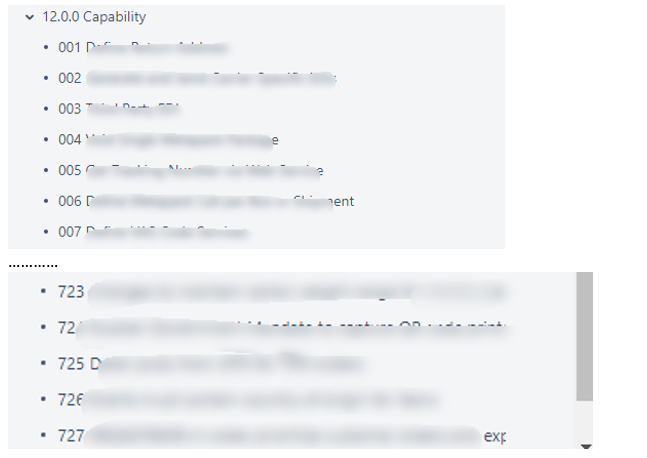
Every significant project initiates with a discovery phase, wherein gathering requirements from various teams and analyzing them can pose challenges if not properly documented. Our approach to address this issue begins with identifying system capabilities, both standard and custom, followed by constructing a matrix to assess requirements and their utilization across various application processes. Subsequently, we label these capabilities and generate a dedicated Confluence Page for each. Each capability is further sorted into various processes and epics to provide a more detailed breakdown.
The next step involves categorizing these capabilities into two main aspects:
- Business: Detailing how the capability is utilized.
- Technical: Describing the implementation process of the capability
The business analysis is detailed through process and configuration pages in Confluence, featuring descriptive content such as screenshots or videos, tailored primarily for operations and end-users. These pages elucidate how a capability is utilized in operations and provide configuration details.
Similarly, the technical analysis is also documented within Confluence pages, containing information about the development process, requirements for implementation, and deployment procedures. These documents are geared towards development and technical teams.
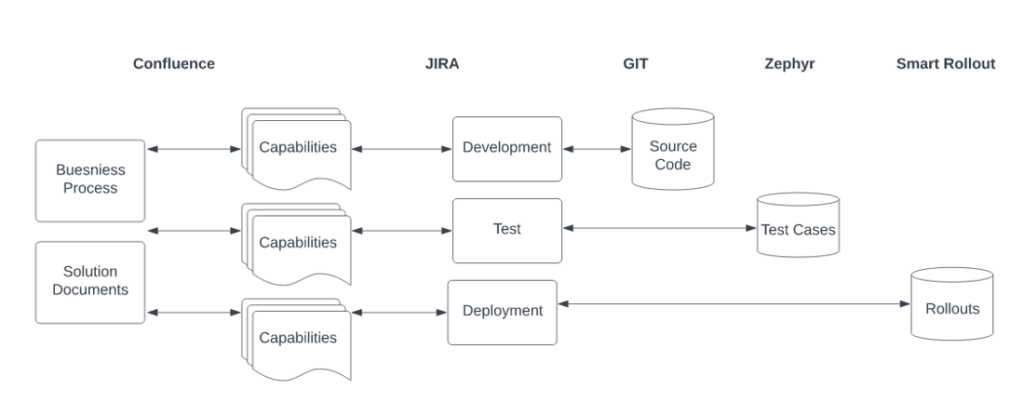
By linking each business process and technical solution through capabilities in Confluence, the project team can seamlessly associate development efforts with specific business processes and vice versa. This interconnectedness enables easy identification of the technical development corresponding to a particular business process and vice versa.
Case Study
Let’s delve into a case study exemplifying this methodology through a WMS Upgrade Project, specifically upgrading RP WMS 2011 to BY WMS 2021. In this instance, we identified over 800 capabilities employed across more than 40 warehouses globally. Below, we outline several assumptions and challenges encountered during this project.
- Categorize capabilities and designate current usage per warehouse.
- Conduct a fit-gap analysis of the existing capabilities while ensuring the retention of core requirements.
- Identify an optimized approach to replace customized capabilities and minimize major customizations/extensions.
- Maintain comprehensive source code documentation and ensure regular updates
- Develop a unified solution with a single code base applicable across all instances.
- Actively maintain all documents and source code.
- Track each deliverable and associated approval processes.
- Implement Agile processes for project delivery
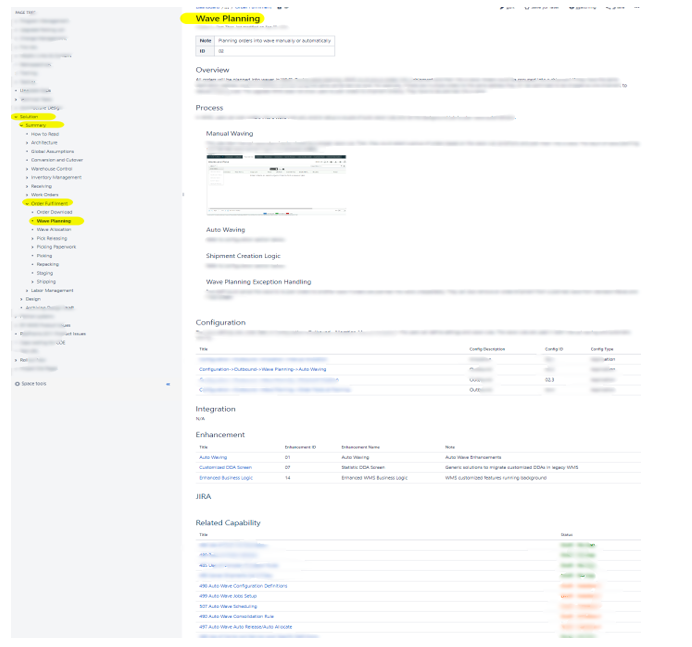
Auto Waving, a key feature within the “Order Fulfillment” process and the “Wave Planning” epic, encompasses various capabilities. In our solution design, these capabilities are analyzed and categorized under the ‘Wave Planning’ epic.
Technically, all auto waving capabilities are consolidated into a unified design framework that adapts to changes in various design aspects.
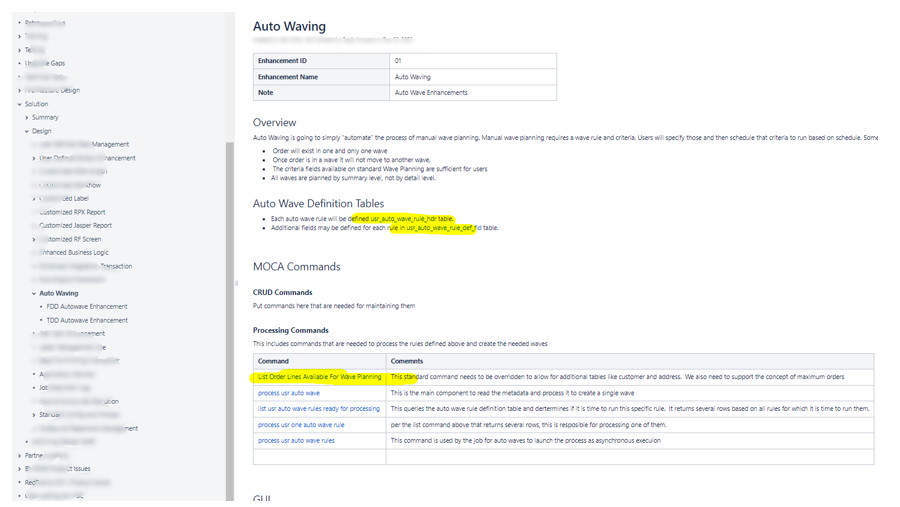
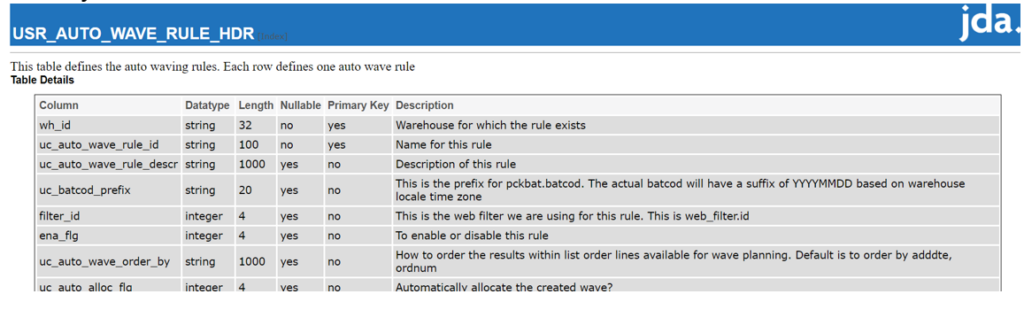
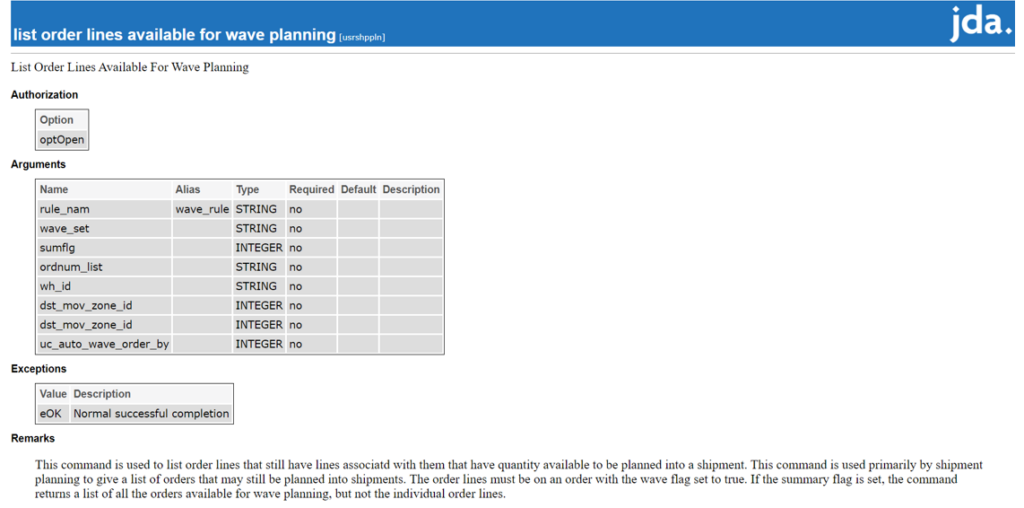
Changes can be effortlessly reflected by linking the design document directly to the source code. This ensures that crucial structural and command information can be readily retrieved without the need to inspect the source code itself.
Table definition
Command definition
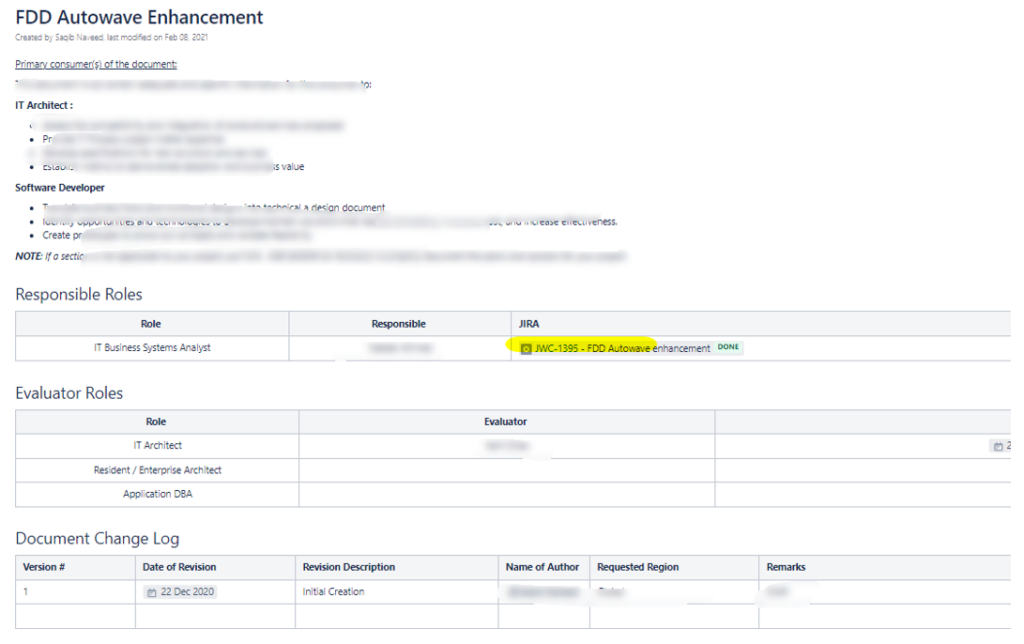
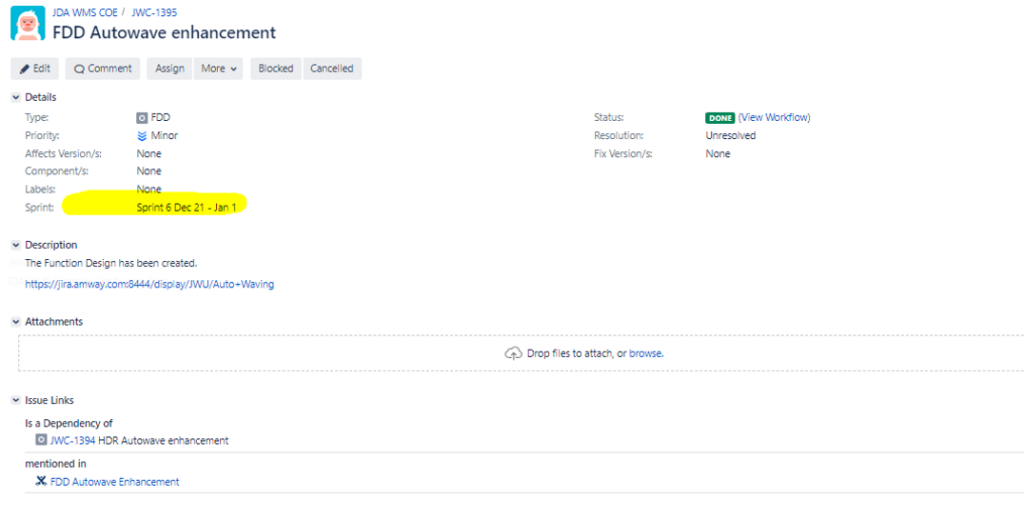
Both design and development tasks are associated with respective JIRA Tasks, enabling real-time progress tracking. In this scenario, the JIRA task is initially created in the backlog and subsequently planned into sprints.
Confluence page of the Design
JIRA task of the Design
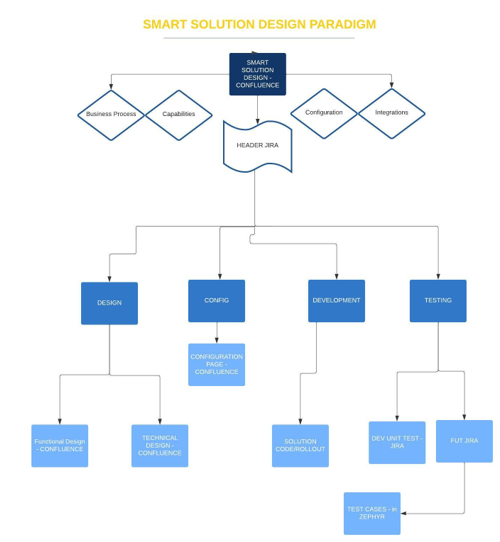
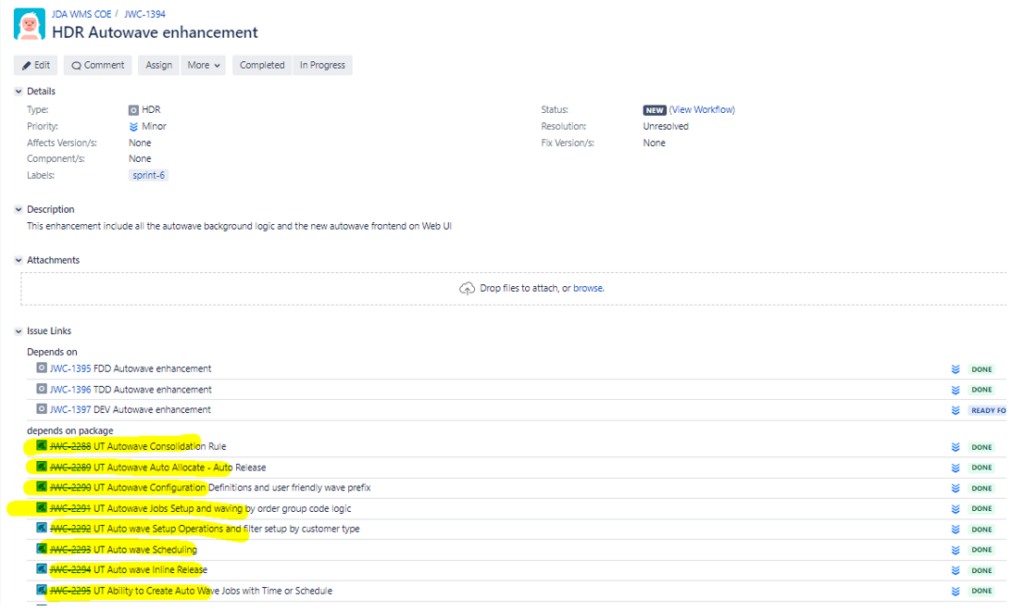
Once development for the Auto Wave capabilities is finished, the developer conducts unit tests for each capability, with each having an associated test plan. Subsequently, the Auto Wave Capability in Confluence is linked to a ‘Header Jira’, which connects all deliverables across various Jira Types to the Capability itself.
Upon completion of development, a custom deployment feature is employed to generate a rollout for the Auto Wave Development Jira. Subsequently, an automated process is utilized to deploy the rollout to each environment, contingent upon the Jira Status.
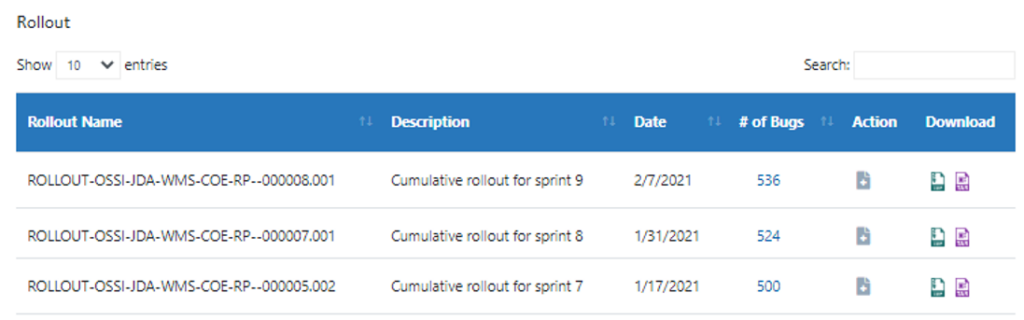
The final stage involves Rollout Deployment, which undergoes various approval processes within Jira and is meticulously tracked to ensure complete visibility.
Conclusion
During the initial stages of a project, considerable resources are typically allocated to document creation. However, as the project progresses and resource allocation shifts, these documents often become outdated. The Smart Solution Design Paradigm framework offers an actively maintained document structure, enabling users to locate and update project-related documents in real-time, thus creating a living document environment. This framework leverages the seamless integration between Confluence and JIRA to harmonize business processes with development efforts. Consequently, users can easily trace the implementation of a business requirement and vice versa.
With Jira overseeing the workflow for deliverables and Confluence housing the Solution Summary, this ecosystem can accommodate various facets of project management seamlessly.
The overarching framework of the Smart Solution Design Paradigm appears as follows.